The FireCycle Solution

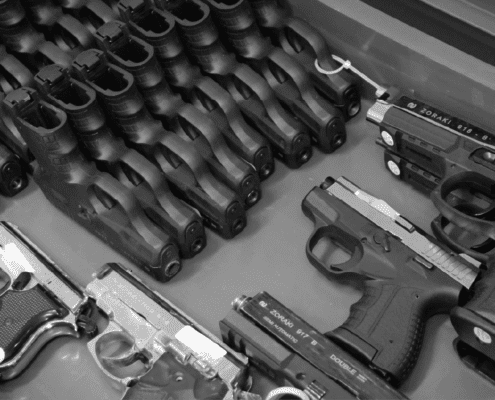
FireCycle is the world’s only purpose-built firearms licensing and registration system, enabling jurisdictions to digitally record state and civilian firearms and ancillaries, track their transactional history, and manage the civilian firearms licensing process.

FireCycle empowers national authorities to take a comprehensive approach to firearms control by:

Managing the lifecycle of firearms and their ancillaries – ensuring oversight over all civilian and state-held firearms, essential components, controlled accessories, and ammunition, FireCycle tracks their associated history of transactions, their owners and keepers, their status, technical data, and storage locations.

Tracing and intelligence-building – improving the capacity of law enforcement to investigate firearms-related crime, conduct domestic and international firearms tracing, and legal test-fire programmes.

Licensing civilian firearms – An online portal allows civilians to apply for, renew and manage their firearms licences; and law enforcement to process firearms licence applications, conduct eligibility checks, grant or deny applications, and monitor licence-holders.

Rapid deployment and configurability – FireCycle’s modular commercial-off-the-shelf design ensures that it can adapt to any country’s firearm licensing law, can integrate with national databases and police intelligence systems, and is rapidly deployable on-premises or via private and public cloud infrastructure.

Manage the Lifecycle

FireCycle empowers national authorities to comprehensively regulate firearms and ancillaries in their jurisdiction, fully managing the lifecycle of civilian and state-held firearms from manufacture or import to eventual destruction or export.

FireCycle manages lifecycles of firearms, essential components, controlled accessories, and ammunition, acting as a single source of truth regarding:

Who – FireCycle distinguishes between the natural or legal persons in possession of a firearm or ancillary and who owns the firearm or ancillary, allowing authorities to identify who is in possession, and whether the firearm or ancillary has been given, assigned or leased to another person.

What – Technical data such as the make, model, manufacturer, type, action and more, in addition to identifying markings such as the serial number of a firearm or ancillary, standardised by the RCMP’s Firearms Reference Table (FRT) and Arquebus’ proprietary Ancillary Reference Table (ART).

Where – An interactive GPS map displays the storage locations of firearms and ancillaries in addition to the coordinates of firearms and ancillaries which state or law enforcement agencies (LEAs) have recovered, seized, or recorded as lost or stolen.

When – the time and date of every transaction throughout a firearm or ancillary’s lifecycle is recorded, providing a full audit history.

Enable Tracing and Fast-Time Intelligence

FireCycle expedites the domestic and international tracing of firearms and ancillaries, improving the capacity of state agencies to investigate local, national, and international firearm crime.

FireCycle allows national authorities to collect, search, share, and verify information about stolen, lost, recovered, surrendered, seized or legal firearms, essential components, controlled accessories, and ammunition, empowering them to:

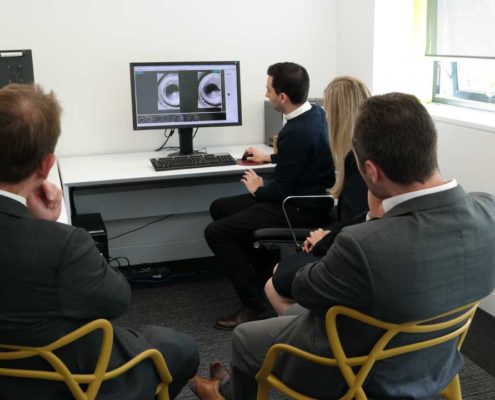
Detect diversion of firearms and ancillaries by storing accurate data on the legal firearms and ancillaries within a jurisdiction’s borders, recording when they are lost or stolen, and supporting ballistic test-fire programmes via integration with LeadsOnline’s Integrated Ballistic Identification Systems (IBIS).

Disrupt firearms criminality by enabling state agencies to export data on lost, stolen, recovered, surrendered and seized firearms and ancillaries to international tracing databases such as INTERPOL’s iARMS and the ATF’s eTrace system.

Deter the diversion and misuse of registered firearms and ancillaries – tracking the individual to which it has been assigned or leased, as well as ensuring accountability via maintaining a comprehensive audit log of user activity.

Deny fraud and bad actors through FireCycle’s robust information security features, purpose-built firearms transaction logic, and customisable system user roles and permissions functionality.

Licence Civilian Users

FireCycle’s advanced civilian firearm licensing functionality enables national authorities to manage the licensing process from end-to-end.

Designed to streamline the civilian firearm licensing process for both government agencies and civilian owners, its features include:

Online Portal – civilian and businesses can apply for, renew and manage their firearm licences, warrants and certificates, book appointments with relevant agencies via a diary management function, and oversee their firearm inventories.

Case Management System — Law Enforcement can manage firearms licence applications, variations/modifications and renewals, as well as identify, verify, and monitor the eligibility of civilians via integration with existing national databases and intelligence systems.

Full Registry Integration – allows users to manage the licencing and registration of civilian firearms and ancillaries in a single application, with changes in a licenced owner’s status firearms’ status automatically triggering a corresponding action within the firearms registry.

Adapt to Requirements

FireCycle is a rapidly deployable, commercial off-the-shelf lifecycle management solution, configurable to any firearm registration and civilian firearms licensing requirement globally.

FireCycle can be configured to accommodate your jurisdiction’s unique firearms control regime, internal systems and capacity, possessing:

Role-based management – Administrators can create specific user roles with various permission types to control the levels of access, ensuring security and privacy across the system.

Customisable processes – users can customise the legal categorisations for firearms, add additional data fields to records for natural and legal persons, firearms and ancillaries, design the type of firearm licences available and edit transactional steps in the licensing case management process.

API integration – the system can integrate with third-party systems including criminal records, health records, and identity management systems, as well as payment engines for licence applicational and renewal fees.

Multiple deployment configurations – FireCycle is deployable on-premises, or rapidly to private or public clouds, with remote configuration.

Support Safer Societies

The uncontrolled proliferation and misuse of firearms present a risk to national security, requiring a comprehensive approach which seeks to manage each step of the lifecycle of firearms and ancillaries within a jurisdiction.

Arquebus has conducted extensive research on firearms licensing and registration practices throughout the globe, highlighting common challenges to effective lifecycle management. Many countries combine licensing and registration or have siloed approaches that are administratively burdensome and unsuitable for effective firearm intelligence or tracing.

Based on this research and Arquebus’ experience in assisting countries with firearms control, we believe a holistic approach to lifecycle management is vital to safer societies. Learn more about the impacts of firearms licensing and registration by downloading our report.

If you wish to learn more about how FireCycle can support you, contact us for further details or to organise a demo.

Recent News

NSCS 12: A Year in Review

Over the last twelve months, Arquebus has published a series of blog posts on how jurisdictions can effectively control small arms, light weapons and their ancillaries (SALW) via the development and implementation of a comprehensive National SALW Control Strategy (NSCS).

NSCS 11: National Legislative Frameworks

We talk to Paul James, Arquebus Chairman and co-founder, to discuss the vital role that National Legislative Frameworks (NLFs) play in a NSCS and how intelligence-led policing (ILP) can facilitate their effective enforcement and development.

NSCS 10: International Cooperation and Information Exchange

The effective control of small arms, light weapons and their ancillaries (SALW) is an endeavour that goes beyond national borders.Arquebus is delighted to welcome Adriana Toston Diez, Major in the Guardia Civil and EMPACT Driver, to discuss the importance of international cooperation and information exchange in a NSCS.
FireCycle

NSCS 9: SALW Collection and Destruction

SALW collection and destruction programmes (SCDPs) help to combat the excessive accumulation of SALW and play a key role in post-conflict reconstruction efforts. Arquebus is delighted to welcome David Hutchison, Weapons Marking Specialist for the HALO Trust, to share his insights on implementing successful SCDPs and how they can support a NSCS.

NSCS 8: Physical Security and Stockpile Management

The Physical Security and Stockpile Management (PSSM) of SALW is a vital step toward reducing the risk of unplanned detonation and diversion of SALW. Arquebus talks to Clinton Brunt, Technical Field Manager from the Mines Advisory Group (MAG) in Lebanon, to discuss the role of PSSM in a National SALW Control Strategy.

Arquebus Chairman Paul James Speaks to Walkers and Talkers

Arquebus’ Executive Chairman and former head of the National Ballistic Intelligence Service (NABIS), Paul James, recently delivered a talk to the fantastic audience at Walkers and Talkers, a Bristol-based charity alleviating social isolation in the local community.
VisionX

NSCS 7: Legal Test-fire Programmes

The diversion of small arms, light weapons and their ancillaries (SALW) into illicit circulation fuels SALW misuse, with the prevention of diversion being a critical objective of many national SALW control strategies (NSCS). Depending on a state’s requirements, authorities might consider the implementation of a Legal Test-fire Programme (LTFP)...

NSCS 6: Marking SALW and their Ancillaries

The proper marking of small arms, light weapons (SALW) and their ancillaries is vital to detect and disrupt the diversion of SALW into illicit circulation. Arquebus talks to Henry Leach, Head of Operations for Conflict Armament Research (CAR) in Somalia, to discuss CAR’s SALW work in Somalia and the key role marking plays in a NSCS.
Training

NSCS 5: National Firearms Focal Points

The misuse of SALW represents a significant threat to public safety, requiring the state to effectively leverage its resources to level the playing field against criminals operating in an ever-evolving security environment.For this month's article, Arquebus talks to Lorenzo Benedet, Major in the Spanish Guardia Civil and head of the Spanish NFFP to discuss the role that NFFPs play in combatting SALW criminality as part of a national SALW control strategy (NSCS)...